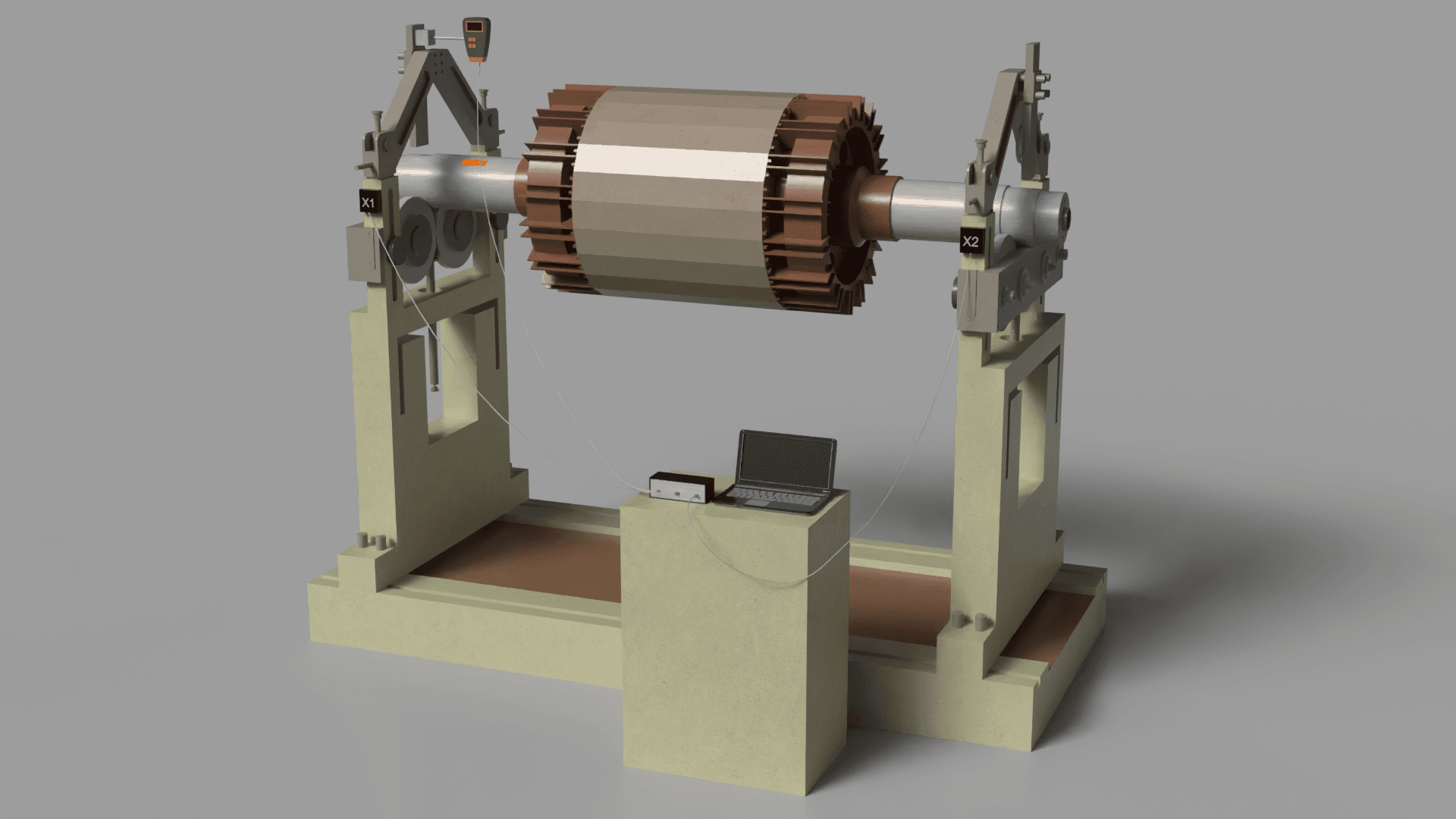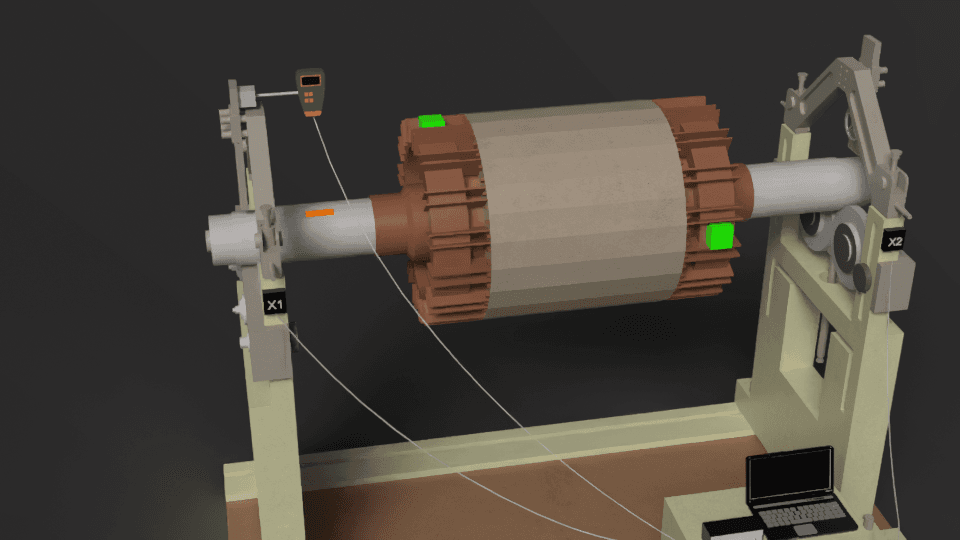
Establish a USB connection between the instrument and the computer, ensuring the software is set up properly.
Setting Up the Sensors
Mount the vibration transducers securely on the machine's housing where vibrations are most pronounced, typically near the bearings.
Aim the optical rpm sensor at the rotating shaft and apply a reflective strip to the shaft for phase angle data acquisition.
Launching the Software
Launch the Balanset software on your computer.
Select the appropriate balancing mode: single-plane or two-plane, depending on the rotor type and your specific requirements.
Measuring Initial Vibration
Run the rotor up to its operating speed.
The application will acquire data on vibration magnitude, rotational velocity, and phase angle to determine the initial imbalance state.
Mounting the Test Weight
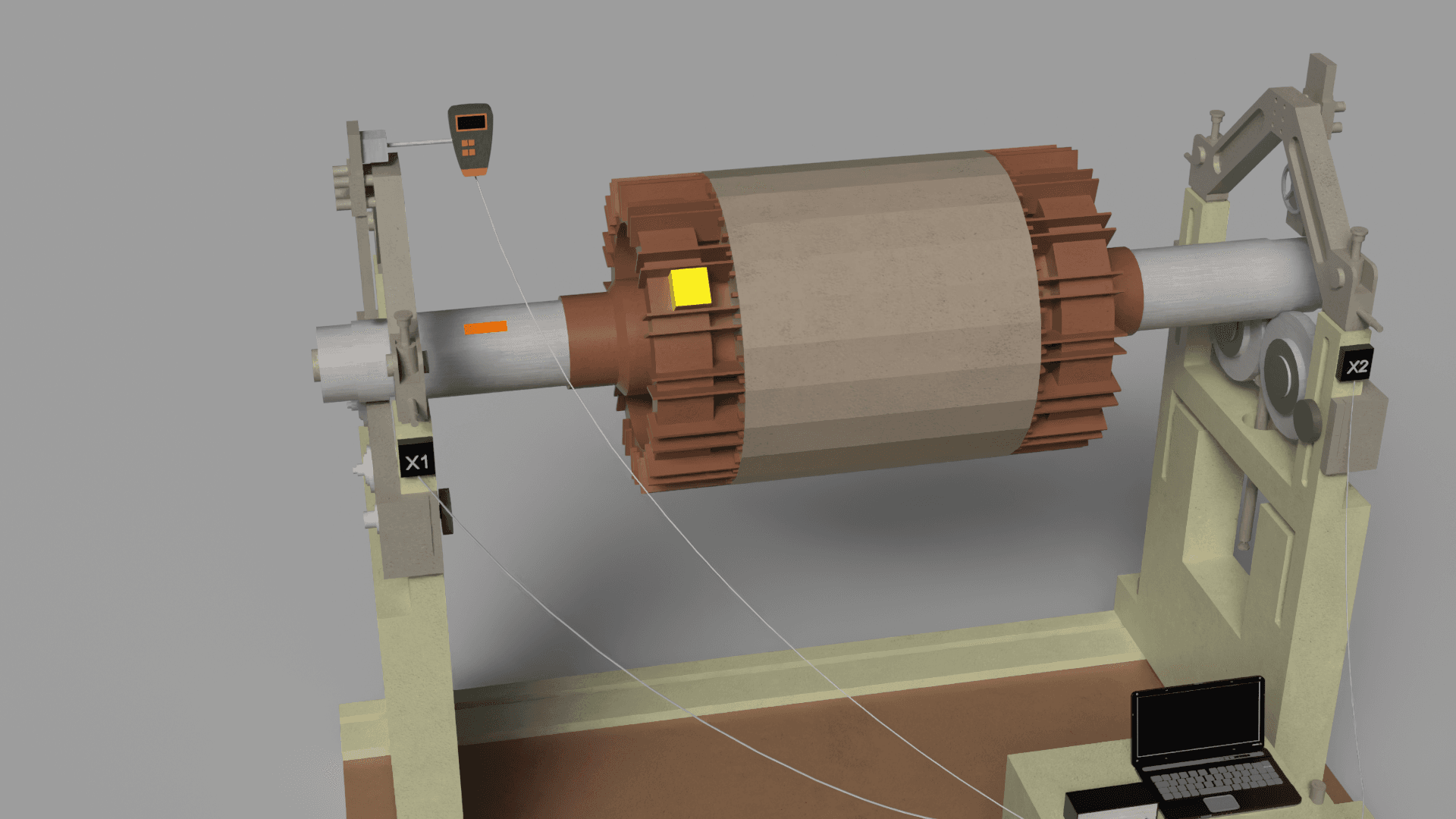
Stop the rotor and attach a trial weight at a specific location on the rotor. The weight's mass can be specified within the software (e.g., in grams).
Resume rotor operation, and the program will capture the resulting changes in vibration amplitude and phase.
Determining the Corrective Mass
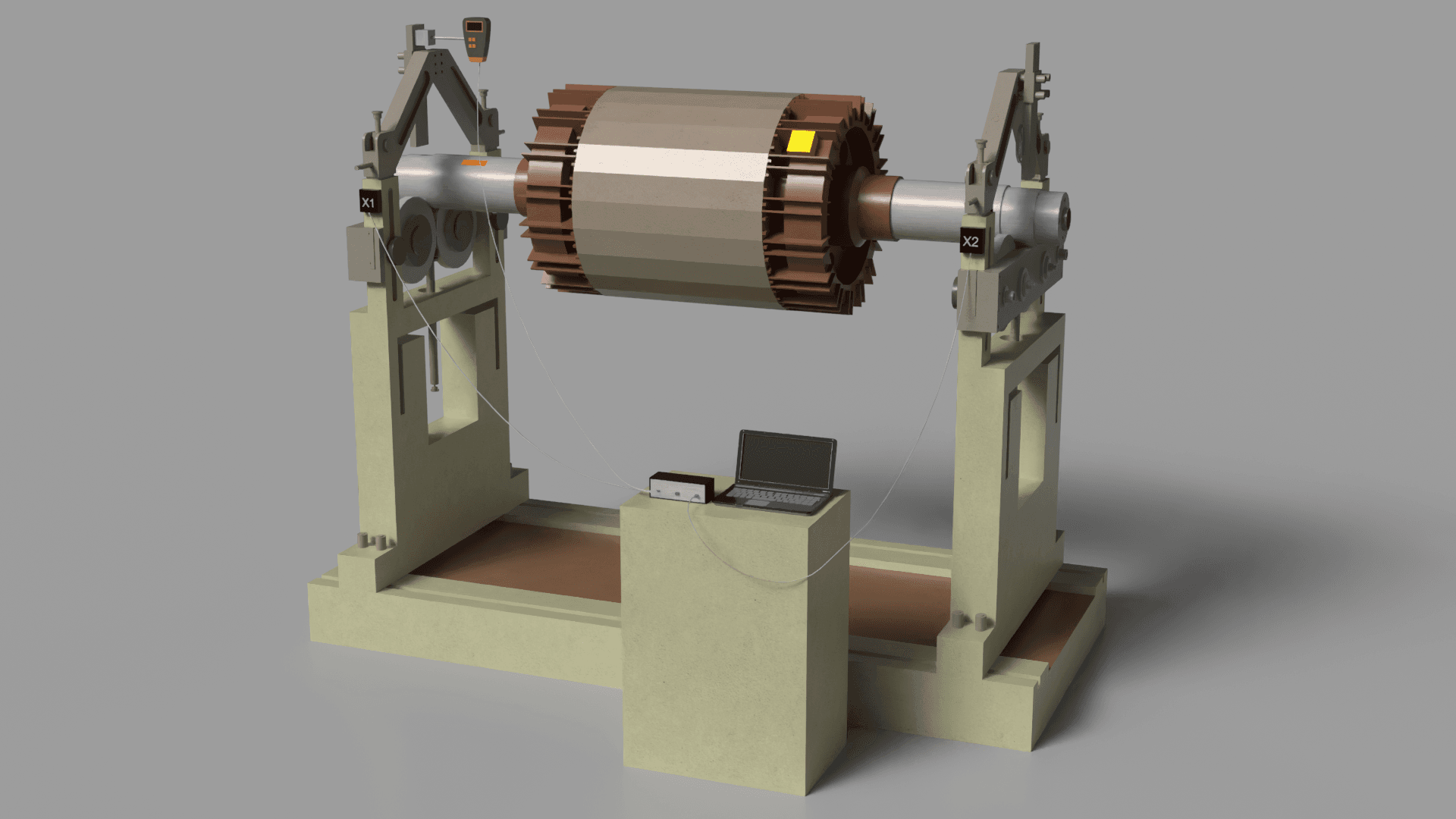
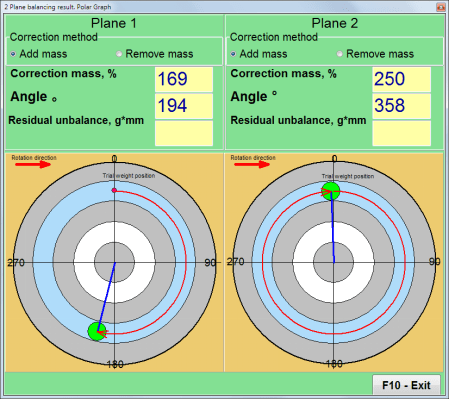
Using the acquired measurements, the program automatically determines the required corrective weight's mass and angular position.
The calculated values are presented on-screen in both numerical and graphical formats.
Installing the Correction Weight
Install the correction weight on the rotor according to the software's calculations.
If necessary, perform intermediate checks to verify that the imbalance is being reduced.
Verification and Balancing Completion
After installing the correction weight, run the rotor again and check the residual vibration level.
If the vibration level is within acceptable limits (according to ISO 1940), the balancing is complete.
If the vibration level remains high, repeat the process with further weight adjustments.
Creating a Balancing Report
All balancing results are logged and archived within the software, from which you can produce a printable report summarizing the vibration levels, compensating weight, and its installation position.
Post-Balancing Checklist
Verify the secure attachment of all balancing weights and measurement sensors.
Check that the rotor's rotation is smooth and free from undue noise or vibration.
If the rotor is part of a complex mechanism, verify the proper interaction of all its components.
By implementing this method, you can effectively eliminate imbalance, reduce vibration levels, and increase the lifespan of the machinery.